
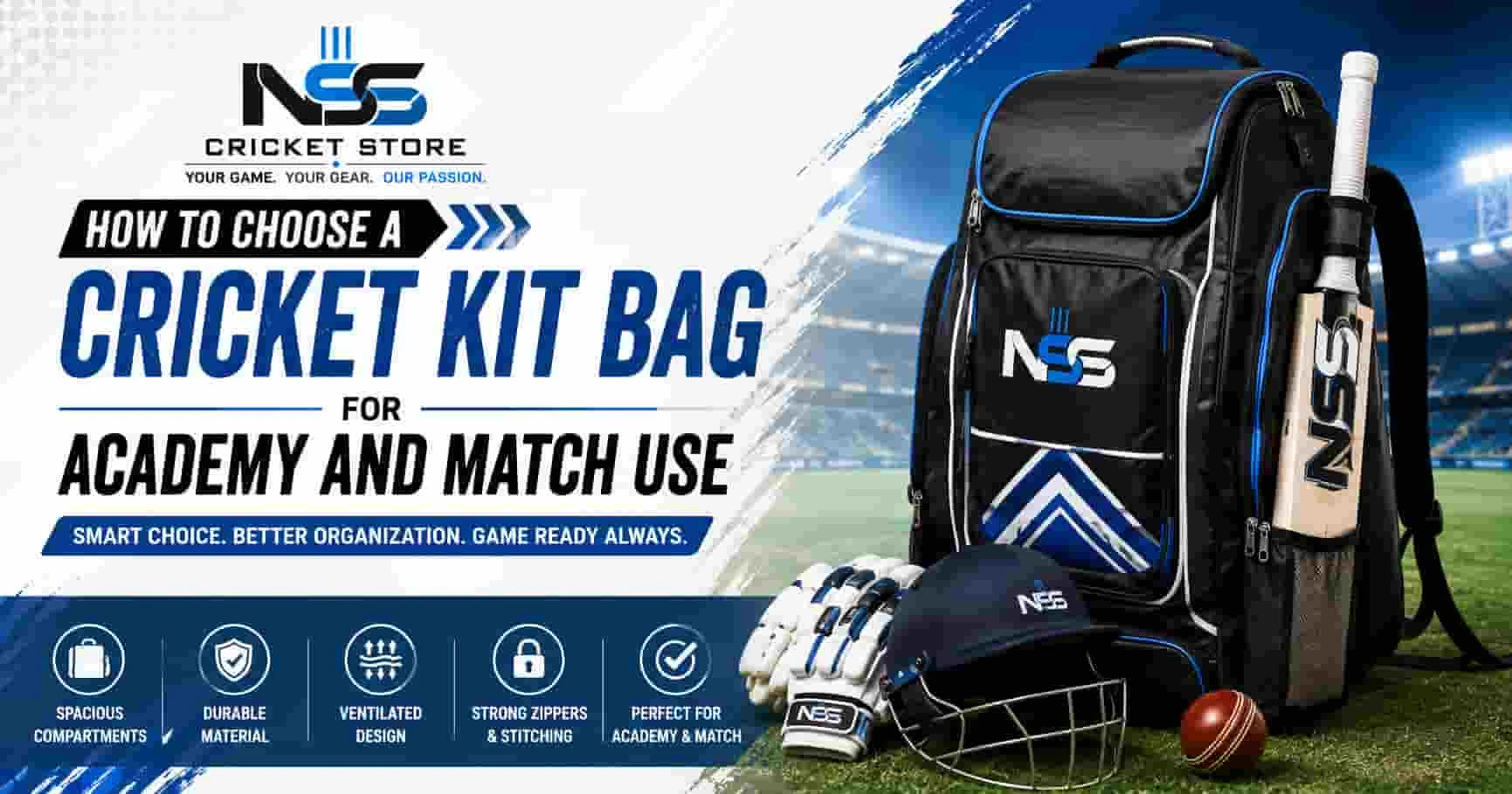
* All product/brand names, logos, and trademarks are property of their respective owners.
A cricket bag is not only a means of carrying cricket equipment. Cricket kit bags designed for academy-level cricketers will be spacious enough to accommodate all the equipment needed for training, while match players would require extra room for protective equipment.
A proper selection of a cricket kit bag will ensure easy transportation of your cricketing accessories. The choice of size, design, compartments, and methods of carriage can often create confusion among customers while choosing a cricket bag because the right kind of cricket bag selection depends on your frequency of game and the gear you require.
List out the equipment that you usually carry during ground practice before deciding on which bag to buy.
A junior cricketer may just need his bat, batting gloves, pads, helmet, shoes, and some other accessories. For an academy-level cricketer who practices at least thrice a week, the list may include extra clothing and training equipment.
Match day equipment could be more in number since it may require carrying the following equipment:
Batting gloves / wicket-keeping gloves
Leg pads
Helmet
Thigh guard/ arm guard/chest guard
Cricket shoes
Training shoes
Match clothing
Water bottles and towels
Accessories
Having a clear idea of how much you carry during your practices would help in choosing a right-sized bag.
An academy player may use their bag several times every week. That means convenience and organization are particularly important.
A Cricket Kit Bag for Academy use should ideally have enough room for everyday equipment while remaining easy to carry between home, the academy, and the ground.
Look for features such as:
Separate compartments can prevent gloves, clothing, footwear, and protective equipment from becoming mixed together.
Dedicated bat sections are useful for players who regularly carry one or two bats. They can also reduce the chance of bats being damaged by other equipment inside the bag.
Frequently used items should be easy to reach. A bag with well-positioned zippers and compartments can save time when changing equipment during training.
Academy players may need to transport their kit regularly. Padded shoulder straps, handles, or wheels can make a noticeable difference when the bag is heavily loaded.
A Cricket Kit Bag for Match use often needs to accommodate more equipment than a regular training bag.
Players may carry match clothing, spare clothes, multiple pairs of shoes, additional protective equipment, and personal belongings. The use of a large bag with a carefully designed compartment structure can prove helpful in such cases.
Bigger may not always be better. An overly large bag will be challenging to carry when loaded with all the stuff it is supposed to carry.
Cricket bags are available in several sizes. The ideal capacity depends on the player's equipment.
A simple approach is to divide players into three categories:
|
Player Type |
Typical Equipment |
Suitable Bag Focus |
|
Beginner |
Bat, gloves, pads, shoes, helmet |
Compact storage |
|
Academy player |
Full playing kit plus training items |
Medium to large capacity |
|
Competitive player |
Multiple bats, full protection, clothing and accessories |
Large capacity with multiple compartments |
If you already carry a large amount of equipment, choosing a bag with expandable or additional storage can be useful.
A cricket bag is frequently exposed to dust, moisture, rough surfaces, and regular handling. Material quality therefore matters.
Look for durable fabric with strong stitching and reliable zippers. Reinforced areas are particularly useful around handles, shoulder straps, and frequently opened compartments.
The base of the bag also deserves attention. A strong and durable bottom can help protect the contents when the bag is placed on the ground.
Water-resistant material can be useful when players travel during unpredictable weather. However, water resistance should not be treated as complete waterproof protection.
The best carrying style depends on the amount of equipment and how the player travels.
These can be convenient for players carrying a relatively manageable amount of equipment. They are easy to lift into vehicles and can be useful for short distances.
Players carrying a heavier kit may prefer wheels. Instead of lifting the entire load, the player can pull the bag across suitable surfaces.
Smaller bags with backpack straps can work well for younger players or those who carry limited equipment.
When choosing between these options, think about the distance between your home, vehicle, academy, and playing ground.
Cricket shoes tend to gather dust and water during practices and games. It is not advisable to store these shoes in the same compartment where clothes and gloves are kept.
It would be good if there were a separate compartment just for storing the shoes. It would also be an advantage to have ventilation because it allows some air to flow.
This particular function becomes very useful for academy players since they will always need their shoes after practice sessions.
The bat is one of the most important pieces of cricket equipment, so it deserves adequate protection.
If you normally carry two bats, make sure the bag can accommodate them comfortably. The compartments should not force the bats into awkward positions or make them difficult to remove.
The design should also leave enough room for the rest of the kit. A bag with excellent bat storage but poor overall organization may not be practical for regular use.
A fully loaded bag can become surprisingly heavy. This makes carrying comfort an important consideration.
Look for:
Padded shoulder straps
Strong handles
Adjustable straps
Balanced weight distribution
Smooth wheels, if applicable
Comfortable back support on backpack-style designs
Young academy players especially benefit from avoiding unnecessarily heavy bags.
When comparing options for the Best Cricket Kit Bag, don't focus only on appearance. Consider how you actually use your equipment.
Ask yourself
How often do I play?
Frequent academy sessions may require a durable bag designed for repeated use.
How much equipment do I carry?
Players with multiple bats and extensive protective equipment need greater capacity.
Do I travel frequently?
If you regularly travel to tournaments or away matches, durability and carrying convenience become more important.
Do I need separate storage?
Multiple compartments can make a large kit much easier to manage.
Who will carry the bag?
A younger player may need a lighter, more manageable design, while an adult player may prioritize capacity.
A well-designed Cricket Equipment Bag should make it easier to find your equipment rather than simply providing a large space to throw everything inside.
Try assigning specific areas for different items. For example, bats can remain in their dedicated section, gloves and smaller accessories can go into an accessible pocket, shoes can stay separate, and clothing can occupy the main compartment.
This simple organization can save time before and after practice.
A good Cricket Gear Bag should be able to handle regular use throughout the season.
Rather than choosing a bag based purely on current requirements, consider whether your equipment collection is likely to increase. Academy players can progressively include training accessories, more bats, safety equipment, and additional clothing.
However, it should not be so big that it becomes hard to handle. The idea is to get a combination of capacity, durability, storage, and easy handling.
There could be a lot of items to carry during your academy training or game days. The need for a good bag comes from the necessity of keeping things in one place and being safe when traveling.
One must not just go for any attractive bag or just because it holds lots of stuff. One should consider one's playing schedule, need for equipment, mode of transport, and other factors when selecting a cricket bag. Such a bag will be very useful for you.
A bag according to one's needs, whether one is a beginner playing at academy level regularly or a seasoned player traveling for matches.

No bio available yet.
If you're planning to buy a quad bike, one of the first decisions you'll need to make is whether you
24 September 2026
Watching your child take their first drive in a miniature vehicle is a moment every parent enjoys. M
1 August 2026
Creating an online account should be a clear and carefully considered process. Users searching for t
16 July 2026
Be the first to share your thoughts
No comments yet. Be the first to comment!
Share your thoughts and join the discussion below.

.webp&w=3840&q=75)