
* All product/brand names, logos, and trademarks are property of their respective owners.
Kitchen cabinets influence nearly every part of a kitchen's appearance and function. They provide storage, support countertops, and help organize everyday items. However, replacing cabinets can feel overwhelming when we consider materials, door styles, finishes, installation costs, and storage requirements. A successful cabinet upgrade does not always require changing the entire kitchen layout. In many cases, selecting the right cabinet configuration and finish can improve comfort while creating a more attractive space. Before investing in new cabinetry, we should understand which features provide meaningful value and how they fit our renovation plans.
Choosing the right kitchen cabinets can improve storage, create a coordinated design, and make daily cooking activities easier. However, cabinet selection should involve more than choosing an attractive door style. We should also evaluate construction quality, storage capacity, layout, and installation requirements. Cabinets occupy a large part of the kitchen's visual space. Therefore, changing their color or style can significantly affect the room's appearance. For example, lighter cabinets may create a brighter look, while natural wood finishes add warmth and texture. Moreover, improved storage features can reduce countertop clutter and help us keep frequently used items organized. A well-planned cabinet upgrade should support both the kitchen's appearance and everyday function.
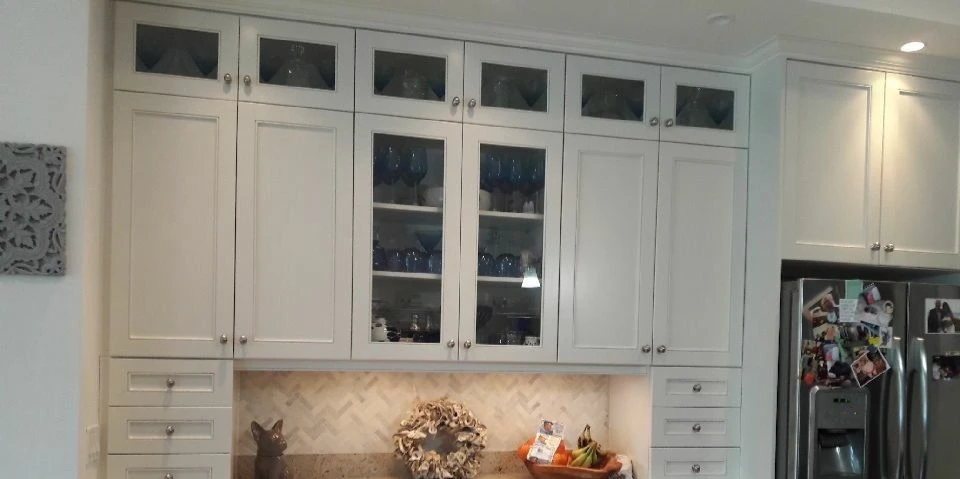
Cabinet door styles help define whether a kitchen feels modern, traditional, or somewhere between. Shaker cabinets feature a simple frame design that works with many interior styles. They can complement natural stone countertops, wood flooring, and neutral wall colors. Flat-panel cabinets have smooth doors without a raised center frame. Therefore, they often suit contemporary kitchens that use simple lines and minimal decorative details. Raised-panel cabinets offer a more traditional appearance. Their decorative center panels can complement classic kitchen finishes.
A cabinet style should work with the kitchen's architecture and surrounding rooms. For example, a contemporary home may benefit from flat-panel cabinets with simple handles. Meanwhile, a traditional home may look better with framed cabinet doors and warmer finishes. However, the design does not need to follow one strict style. We can combine modern storage features with classic cabinet finishes to create a practical transitional kitchen.
Natural wood finishes can create warmth and visual depth in a kitchen. Unlike solid painted surfaces, wood grain introduces natural texture. This can make the cabinets more visually interesting without relying on decorative hardware or complicated door profiles. Oak remains a popular material because of its recognizable grain and versatility. Light oak finishes can complement white countertops, neutral flooring, and many backsplash materials. Meanwhile, darker wood stains can create a traditional or dramatic appearance.
Homeowners who want a clean appearance without choosing plain white cabinetry may prefer lighter wood finishes. For example, slim white oak cabinets can offer a modern design direction that combines a narrow-frame appearance with the warmth of oak tones. This style can work well with light quartz, subtle granite patterns, and simple hardware. However, we should confirm the exact door construction, material specifications, and finish before purchasing. The name of a cabinet style does not always explain whether the entire cabinet uses solid wood, veneer, engineered material, or a combination. Understanding the product specifications helps us compare quality and value.
Good cabinet design should make commonly used items easy to access. For example, pots and pans may fit better inside deep drawers than traditional lower cabinets. Similarly, cooking utensils should remain near the preparation area. We should consider how often we use each item before deciding where it belongs.
Traditional lower cabinets often contain deep spaces that are difficult to reach. Pull-out shelves can make these areas more practical. Deep drawers also provide easier access to cookware, dishes, and food containers. However, drawer hardware must support the expected weight. Before purchasing cabinets, we should check drawer capacity, slide quality, and available storage dimensions. These details can make a noticeable difference in daily use.
Wall cabinets offer useful storage without occupying additional floor space. However, cabinets installed too high can make everyday items difficult to reach. We should keep frequently used dishes, glasses, and food supplies within comfortable reach. Less frequently used items may fit better on higher shelves. It is also important to check cabinet depth near windows, appliances, and doorways. A functional layout should provide storage without interfering with movement.
Cabinet doors attract attention, but cabinet box construction determines much of their long-term performance. Different manufacturers use plywood, MDF, particleboard, solid wood components, and other materials. Each material has different strengths and limitations. For example, quality plywood can provide reliable structural support. MDF creates a smooth surface for painted components, while particleboard performance depends on density, construction, and moisture protection.
Hardware plays an important role in everyday cabinet performance. Cabinet doors open and close repeatedly, so hinges should operate smoothly and provide adequate adjustment. Similarly, drawer slides need to support the items stored inside. Soft-close hardware can reduce slamming and provide a smoother user experience. However, we should compare actual hardware specifications rather than assuming every soft-close system has the same quality.
A kitchen may contain plenty of cabinet space but still feel inconvenient when the layout is poorly planned. For example, drawers that open into appliance doors can create frustrating obstacles. Likewise, cabinets placed too close to corners may interfere with neighboring handles. Therefore, measurements and clearance planning are essential.
Refrigerators, dishwashers, ovens, and microwaves all affect cabinet placement. Before ordering new cabinets, we should confirm appliance sizes and required clearances. For example, refrigerator doors may need extra space to open fully. Dishwasher placement should also allow comfortable loading without blocking important kitchen work areas. These details become especially important in compact kitchens.
Corner cabinets can create useful storage when planned correctly. However, deep corners often make stored items difficult to reach. Rotating shelves and pull-out corner accessories may improve accessibility. We should compare these options based on available dimensions and storage needs. A practical corner solution can reduce wasted space without requiring major layout changes.
Cabinet prices vary according to material, construction, door style, finish, hardware, and installation requirements. Stock cabinets often provide standard sizes at a lower initial price. Semi-custom options offer greater flexibility in dimensions and finishes. Custom cabinetry can support unusual layouts and specific storage requirements, although it may involve higher costs.
The purchase price does not always represent the final cabinet installation cost. Delivery, hardware, trim, installation labor, and removal of old cabinets may affect the total. Moreover, changes to plumbing or electrical systems can increase renovation expenses. We should also consider whether new countertops or backsplash materials are necessary. A detailed estimate helps identify these costs before construction begins.
Finding suitable cabinets requires careful product comparison and clear communication. Before purchasing, we should ask about available materials, finishes, cabinet dimensions, and installation requirements. For homeowners in Dublin and Columbus, Ohio, researching cabinets in Columbus Ohio can provide a starting point for comparing local cabinet options, discussing design needs, and planning a renovation. We should also confirm whether measurements and installation services are available.
Cabinet installation requires careful preparation. Before work begins, we should clear the kitchen and protect nearby surfaces. If existing cabinets need removal, the project schedule should account for disposal and potential wall repairs. Electrical and plumbing adjustments may also need coordination.
Properly installed cabinets should feel stable and operate smoothly. Doors should align correctly, and drawers should open without rubbing against neighboring surfaces. Cabinet boxes should also provide a suitable base for the planned countertop. If the installation includes a kitchen island, the support and placement should follow the approved design.
Cabinet maintenance depends on the materials and finishes. For routine cleaning, a soft cloth and manufacturer-approved cleaner are usually appropriate. We should remove spills promptly, especially around sinks and dishwashers. Excessive moisture can damage some cabinet materials and finishes over time. Therefore, proper ventilation and regular checks around plumbing areas can help protect the cabinetry. We should also avoid abrasive cleaning pads that may scratch painted or finished surfaces. Simple maintenance habits can help.
New kitchen cabinets can improve storage, comfort, and the overall appearance of a home. However, successful cabinet selection requires more than choosing a fashionable color or door style. We should evaluate construction quality, practical storage, cabinet dimensions, and installation requirements. Moreover, natural wood finishes and thoughtful layouts can create warmth without requiring a complete redesign. When we balance appearance, durability, and cost, cabinet upgrades can make the kitchen easier to use and more enjoyable for everyday activities.

Unlike a home appliance, an elevator isn't something you can simply exchange if you're unhappy with
30 September 2026
A home elevator can make everyday movement between floors more convenient, especially in multi-store
25 September 2026
Choosing the right shredder is important when you regularly handle personal, financial, business, or
23 September 2026
Be the first to share your thoughts
No comments yet. Be the first to comment!
Share your thoughts and join the discussion below.